Best AI Tools for Research in 2026 no longer means spending endless nights reading PDFs, juggling citations, or getting lost in Google Scholar. Artificial intelligence has transformed how students, bloggers, scientists, and professionals conduct research.
Table of Contents
From summarising long papers to validating citations, AI research tools now save hours of manual work. But here’s the problem: not every AI tool is reliable. Some generate incorrect references, others lack academic depth, and a few are simply too complicated to use.
Best AI Tools for Content Creators in 2026 help you work smarter. Whether you want to write articles, generate voiceovers, create videos, design images, plan SEO content, or schedule social posts, the right AI tool can save you time and boost productivity.
After hands-on testing and real-world usage, this guide covers the Best AI Tools for Research in 2026 that actually help you work faster, smarter, and more accurately.
Why AI Research Tools Matter in 2026
AI research tools act like a digital research assistant. They don’t replace human thinking, but they drastically reduce repetitive work.
Key benefits of AI research tools:
- Summarise long academic papers in seconds
- Discover related studies you might miss manually
- Analyse large datasets without coding knowledge
- Check whether citations are supported or contradicted
- Organise references and research notes efficiently
When used correctly, these tools improve research quality while saving time.
Top 5 AI Tools for Research in 2026
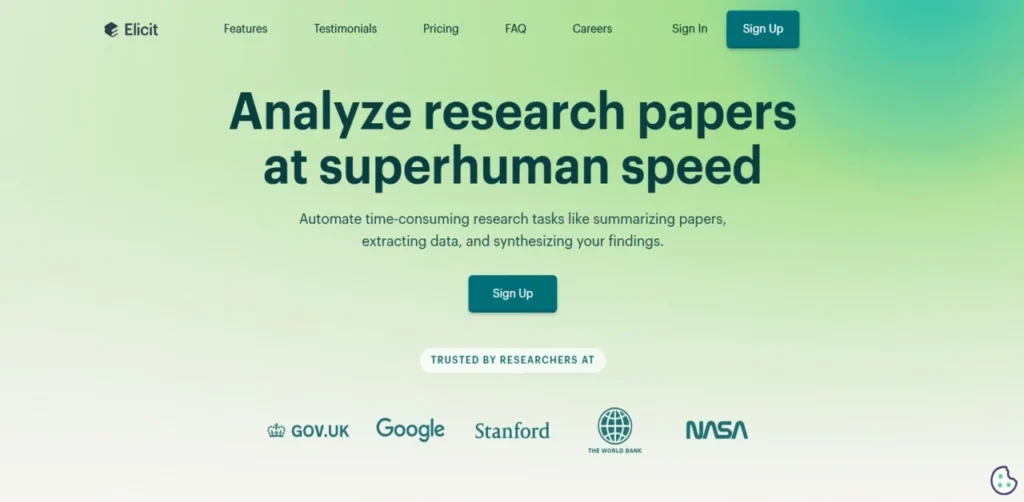
1. Elicit – Best for Literature Reviews
Elicit is designed specifically for academic research. It pulls insights directly from peer-reviewed papers.
Key features:
- Extracts key findings automatically
- Compares results across multiple studies
- Highlights contradictions between papers
Best for: Systematic reviews, academic writing, research validation
Limitation: Limited coverage for very niche historical or cultural topics
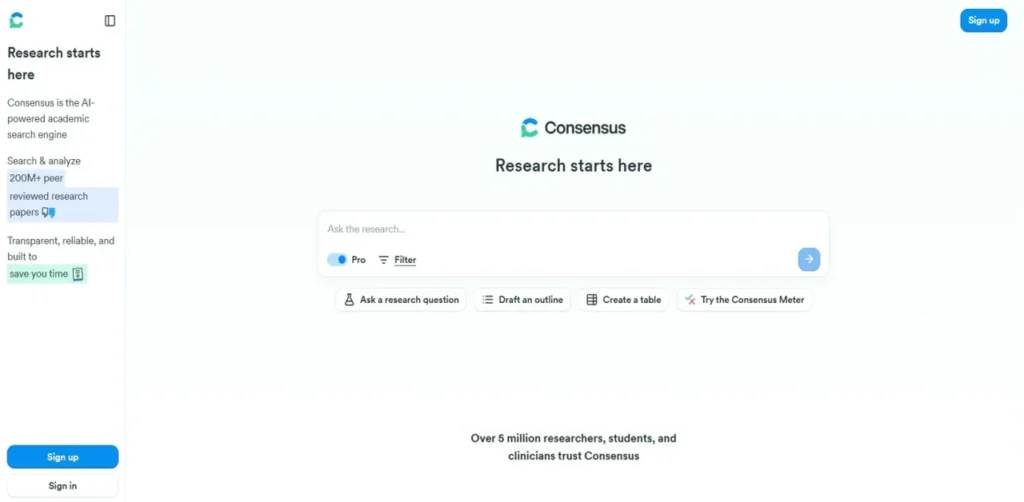
2. Consensus – Best for Evidence-Based Answers
Consensus focuses only on peer-reviewed research, making it ideal for fact-based questions.
What it does well:
- Provides clear “yes / no / mixed” answers
- Displays sample size and study quality
- Filters out blogs and opinion content
Best for: Health, nutrition, psychology, and science research
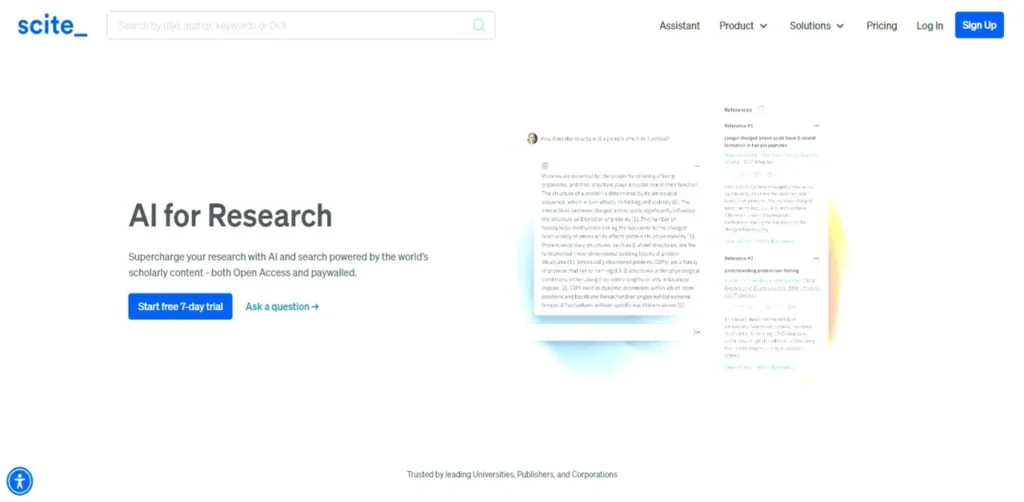
3. Scite.ai – Best for Citation Checking
Scite.ai helps you understand how a research paper is cited by others.
Why it’s powerful:
- Shows supporting vs contradicting citations
- Prevents referencing outdated or debunked studies
- Improves academic credibility
Best for: Thesis writing, academic journals, professional research
4. Research Rabbit – Best for Discovering Related Papers
Research Rabbit works like a recommendation engine for academic papers.
Top advantages:
- Visual research maps
- Alerts for newly published related studies
- Easy integration with reference managers
Best for: Staying updated in fast-moving research fields
5. ChatGPT (Advanced Data Analysis) – Best for Data Insights
ChatGPT’s data analysis mode helps interpret spreadsheets and datasets without coding.

What it can do:
- Identify trends in large datasets
- Generate charts and summaries
- Explain results in simple language
Caution: Always verify calculations and references
Comparison Table: Best AI Research Tools 2025
| Tool Name | Best For | Key Feature | Free Plan |
|---|---|---|---|
| Elicit | Literature reviews | Study comparison | Yes |
| Consensus | Evidence-based answers | Peer-review filtering | Yes |
| Scite.ai | Citation validation | Support vs contradiction | Limited |
| Research Rabbit | Paper discovery | Research graphs | Yes |
| ChatGPT ADA | Data analysis | Trend detection | Paid |
Pros and Cons of Using AI for Research
Pros
- Saves significant time
- Improves research accuracy
- Helps beginners understand complex topics
- Organises data efficiently
Cons
- Possible hallucinated references
- Over-reliance can reduce critical thinking
- Premium features can be expensive
- Requires manual verification
Best AI Research Workflow (Recommended)
To get the best results, combine multiple tools:
- Start with Consensus for quick evidence-based answers
- Use Elicit for deeper paper comparisons
- Validate sources using Scite.ai
- Discover new research with Research Rabbit
This approach balances speed with accuracy.
FAQs: AI Tools for Research in 2026
Q1. Are AI research tools safe for academic use?
Yes, but always verify sources and follow your institution’s guidelines.
Q2. Can AI tools replace human researchers?
No. AI assists research but cannot replace critical thinking and original analysis.
Q3. Are these tools suitable for bloggers and content creators?
Absolutely. They are useful for fact-checking, outlining, and topic research.
Q4. Which AI tool is best for students?
Elicit, Consensus, and Zotero offer the best balance of usability and accuracy.
Final Thoughts
Best AI Tools for Research in 2026 are no longer optional—they are essential. When used responsibly, they enhance productivity, improve accuracy, and help you focus on what matters most: thinking, analysing, and creating original insights.
The key is not to rely on one tool, but to combine the strengths of multiple AI platforms for reliable and high-quality research.