Best AI Tools for Academic Research you spend hours reading papers, searching for the right sources, trying to understand complex findings, and still end up feeling confused. Whether you’re a student working on a thesis, a PhD scholar writing journal papers, or a researcher preparing conference submissions, research takes time and mental energy.
Table of Contents
But in 2026, things are much easier because of AI tools for academic research.
Today’s AI-powered research tools can help you at every stage, including:
- Finding research topic ideas
- Searching for relevant papers
- Summarizing PDFs and extracting key points
- Comparing multiple studies quickly
- Generating citations
- Improving grammar, clarity, and academic tone
- Checking plagiarism before submission
In this article, we will explore the 10 best AI tools for academic research in 2026, along with their features, pros, limitations, and best use cases.
What Are AI Academic Research Tools?
AI academic research tools are software platforms that use artificial intelligence to support researchers in different steps of academic work. They assist in tasks such as literature reviews, brainstorming topics, data analysis, citation management, summarization, and writing improvement.
These tools are extremely helpful because they reduce repetitive manual work and help you focus more on thinking, analyzing, and writing.
Why Use AI Tools for Academic Research?
Using AI tools doesn’t mean “cheating.” It means working smarter.
Key benefits of AI research tools:
- Saves time in finding and reading papers
- Makes literature review easier
- Summarizes complex content in simple language
- Helps you organize sources properly
- Reduces human errors in citations and writing
- Improves your academic writing quality
- Helps you discover new insights from research papers
Limitations you should know:
- AI may generate inaccurate summaries sometimes
- Some tools may miss deep context in research
- Free plans often have usage limits
- You still must verify citations and facts manually
- AI cannot replace original research thinking
Best AI Tools for Academic Research (2026)
Below is a detailed list of the best AI tools for academic research, arranged in a way that matches the natural research workflow.
✅ Comparison Table: Best AI Tools for Academic Research (2026)
| Tool Name | Best For | Highlight Feature | Free Plan Available |
|---|---|---|---|
| Logically (Afforai) | Research topic ideas | AI modes + multiple AI models | Yes (limited AI) |
| Semantic Scholar | Finding papers | Powerful academic filters | Yes (fully free) |
| R Discovery | Paper discovery | AI listening feature | Trial (7 days) |
| Elicit | Research reports | Extracts data from papers | Yes (20 PDFs/month) |
| NotebookLM | Deep analysis | Audio overview + mindmaps | Yes (daily limits) |
List of AI Tools for Academic Research
1) Logically – Best for Research Topic Ideas
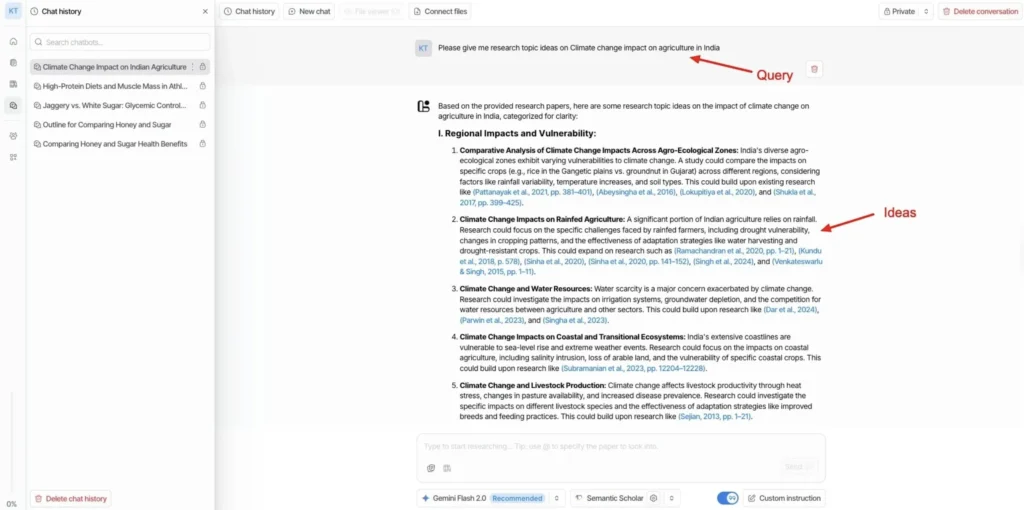
Logically (formerly known as Afforai) is a powerful AI research assistant that helps students and researchers from start to finish.
Best Use Case:
If you are still confused about what research topic to choose, Logically is perfect.
Key features:
- Document Retrieval Mode (from your uploads)
- Semantic Scholar Mode (academic paper database)
- Google Search Mode (wider internet research)
- Multiple AI models like:
- GPT-4o mini
- Gemini Flash 2.0
- Claude 3.5 Haiku
Why it’s useful:
- Finds fresh research directions
- Helps discover gaps in existing studies
- Organizes references into folders
✅ Best for: Beginners, topic selection, early-stage research
💰 Pricing: Starts at $8/month (free plan available)
2) Semantic Scholar – Best for Finding Research Papers
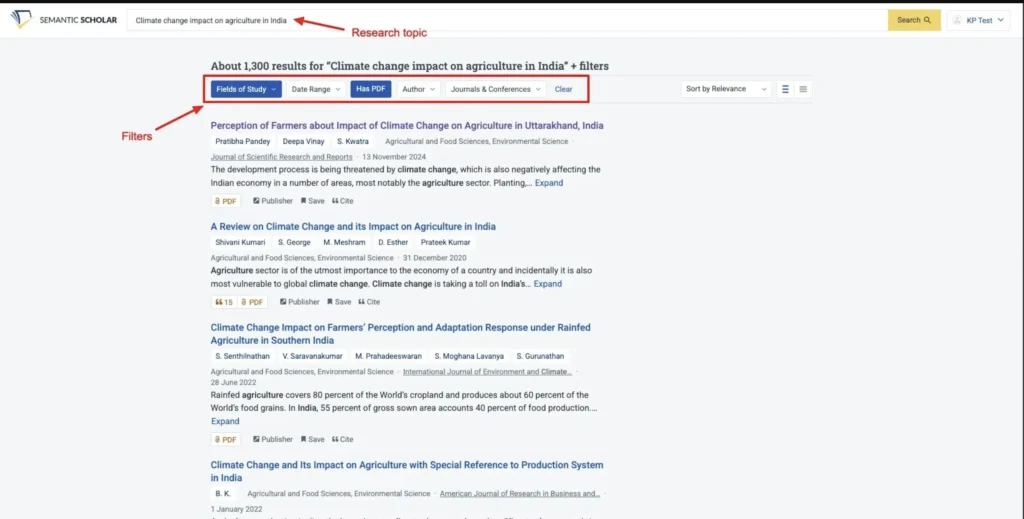
Semantic Scholar is one of the most trusted and widely used academic research tools in the world. It contains 227 million+ research papers across scientific fields.
Key features:
- Smart paper recommendations
- Paper summary view
- Citation tracking
- Filters like:
- Field of study
- Publication year
- Author
- Journal/conference
- “Has PDF” filter
Why it’s best:
- Completely free
- Great for literature review
- Helps discover related work quickly
✅ Best for: Finding papers, literature review research
💰 Pricing: 100% free
3) R Discovery – Best for Literature Research + AI Listening
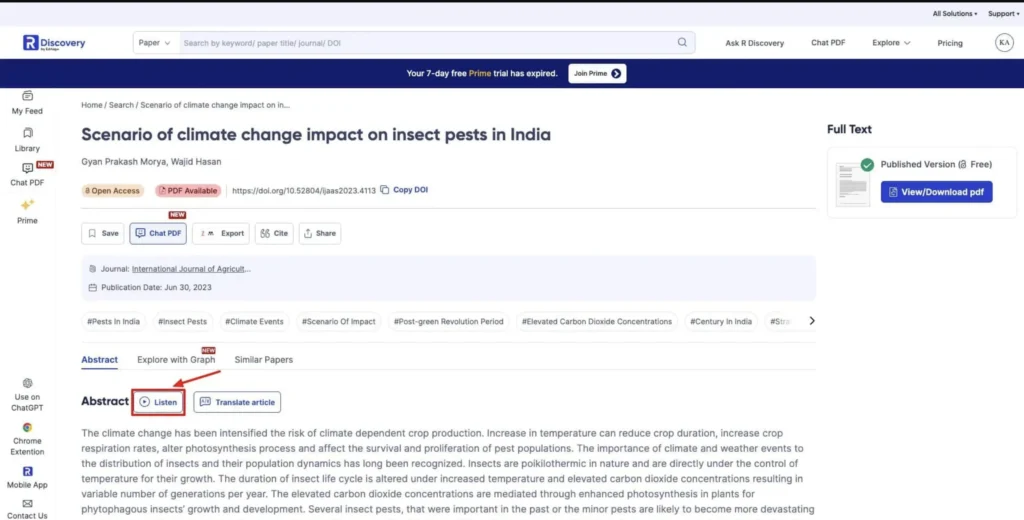
R Discovery is another excellent platform that offers access to 250 million+ research papers.
What makes it unique:
Its Listen feature reads abstracts in AI voice — extremely useful for saving time.
Key features:
- Abstract view + related research graph
- Strong filtering system
- Citation formats supported:
- APA, MLA, AMA, IEEE, Chicago
- AI voice listening to abstracts
✅ Best for: Literature research + audio learning
💰 Pricing: Paid tool but offers 7-day free trial
4) Elicit – Best for Research Reports
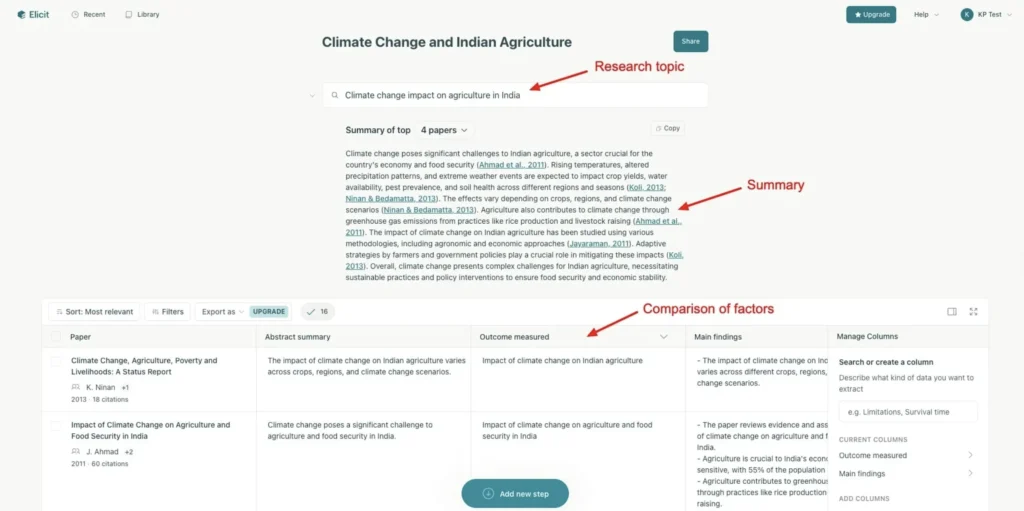
Elicit is one of the most intelligent tools for academic researchers. It helps you not only find papers but also extract structured insights.
Key features:
- Searches 125M+ papers
- Generates summary paragraphs
- Gives research paper table + extra columns:
- findings
- methodology
- limitations
- outcomes measured
- Generates research reports by analyzing top papers
✅ Best for: Research reports, paper comparison
💰 Free plan: 20 PDFs/month + unlimited searches and chats
5) NotebookLM – Best AI Research Assistant
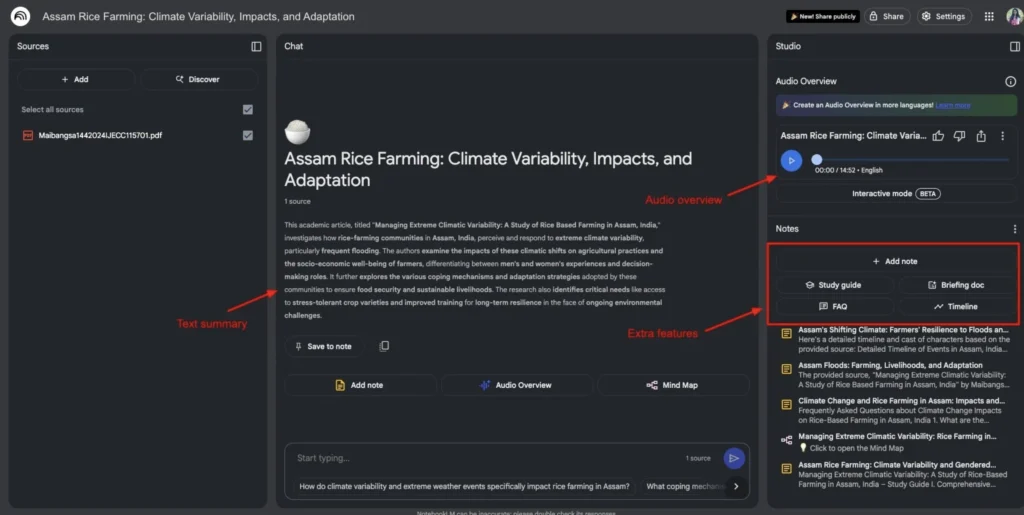
NotebookLM is developed by Google Labs and is designed for deep understanding of documents.
Why NotebookLM stands out:
It doesn’t just summarize—it helps you learn.
Top features:
- Chat with uploaded PDFs
- Creates:
- Mindmaps
- Audio overview podcast (2 hosts style)
- Study guide
- FAQs
- Timeline notes
- Discover feature to find sources on a topic
✅ Best for: Deep analysis, concept understanding, revision
💰 Free plan: 100 notebooks + daily limits
Conclusion
Best AI Tools for Academic Research are transforming how students and researchers work in 2026. Instead of spending days doing manual literature review, summarizing PDFs, and formatting citations, you can now automate the time-consuming parts and focus on what matters most—your research insight.
However, always remember: Remote work has now become a normal way of working for many professionals around the world, not your replacement. Always verify sources, check citations, and apply your own academic reasoning for high-quality research output.